
Attention
ADJUMANI DISTRICT STRENGTHENS WATER SAFETY AND ENVIRONMENTAL PROTECTION THROUGH NEW €63,000 PARTNERSHIP PROJECT.
By Bazio Doreen
Adjumani District Local Government has launched a €63,000 (approximately UGX 250 million) project aimed at strengthening water safety, improving environmental protection, and enhancing public health services for both refugee and host communities in the district.
The project, titled WaEPA (Actions for Water and Environmental Protection), is being implemented through a partnership between Adjumani District Local Government, the Municipality of Sinai in Italy, Anawim Africa, and the University of Sassari. The initiative supports Uganda’s commitments under the National Development Plan IV (NDP IV), the National Environment Act 2019, the National Climate Change Policy, and Sustainable Development Goal 6 on access to clean water and sanitation.
Adjumani District remains one of Uganda’s major refugee-hosting districts, currently accommodating more than 240,000 refugees, mainly from South Sudan, according to figures from the Office of the Prime Minister and UNHCR. The increasing population pressure has heightened demand for safe water, sanitation services, environmental conservation, and waste management systems in both refugee settlements and host communities.
Government officials say the project is expected to strengthen district capacity in addressing these challenges while improving public health and environmental sustainability.
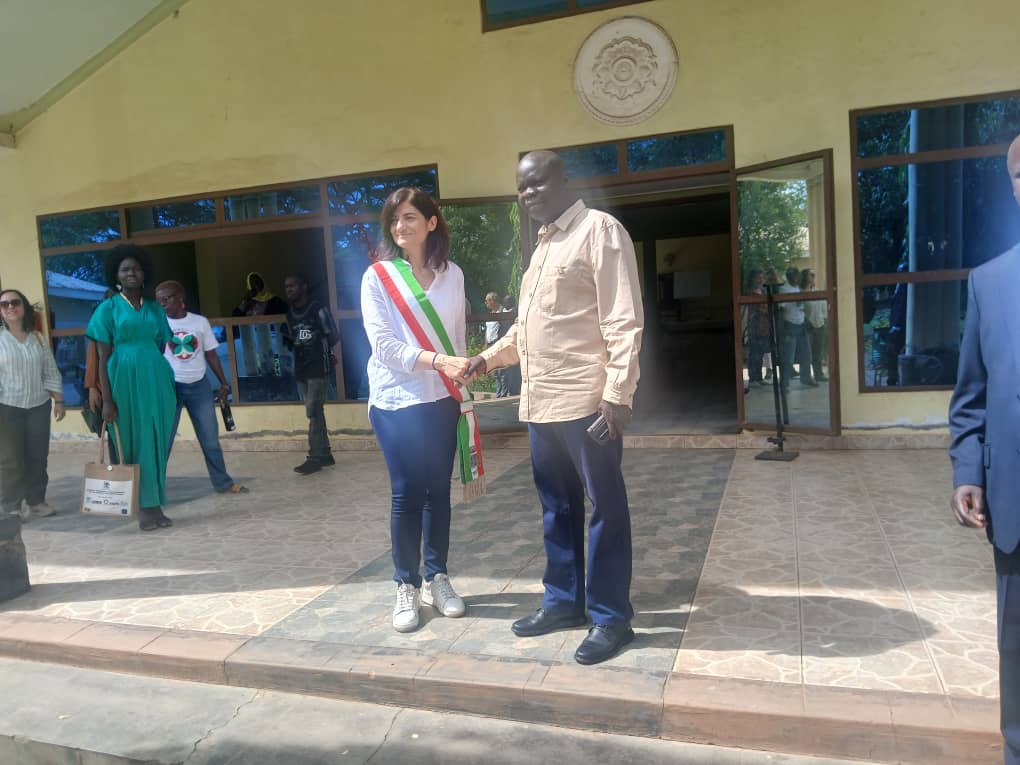
Speaking during the launch, Barbara Pusceddu, Mayor of Sinai Municipality, commended the partnership with the district and emphasized the importance of international cooperation in responding to climate and environmental challenges affecting communities globally.
“Environmental protection and waste management are shared responsibilities that require collaboration between governments, institutions, and communities,” she noted.
A major component of the project will focus on upgrading the district water analysis laboratory to improve testing and monitoring of water sources, including boreholes, wells, and springs. The intervention will provide modern laboratory equipment, consumables, and technical training for staff to strengthen water quality surveillance and ensure communities have access to safe water.
According to the Ministry of Water and Environment’s Sector Performance Report, access to safe water in rural Uganda currently stands at about 69 percent, while environmental degradation and climate-related pressures continue to affect water sources and ecosystems across the country. Northern Uganda, including refugee-hosting districts, remains particularly vulnerable due to deforestation, land pressure, and increasing demand for natural resources.
Adjumani District Natural Resources Officer, Giyaya Charles, said previous government and partner-supported interventions had already strengthened water quality monitoring and environmental conservation efforts in the district.
“This new project builds on existing efforts to improve environmental management and safe water systems while expanding services to benefit more communities,” he said.
The project will also establish a plant pathology laboratory to monitor plant diseases and improve the quality of seedlings produced in nurseries. District authorities say this intervention will support afforestation, environmental restoration, and sustainable forestry management in line with Uganda’s National Forestry and Tree Planting Act.
Project Coordinator Rev. Father Charles Vura Obulejo said the initiative will prioritize capacity building through training local leaders, technical staff, and communities in sustainable natural resource management, governance, planning, and domestic resource mobilisation.
In addition, schools and community groups will benefit from environmental awareness campaigns targeting climate change adaptation, conservation, sanitation, and sustainable development practices, especially among young people.
District leaders welcomed the initiative, noting that Adjumani continues to face challenges related to environmental degradation, waste management, and increased pressure on water resources due to rapid population growth and refugee influxes. Uganda currently hosts more than 1.7 million refugees, making it the largest refugee-hosting country in Africa.
Officials say the WaEPA project will contribute to improved health outcomes, environmental protection, and resilient livelihoods while strengthening implementation of Uganda’s national policies on climate action, natural resource management, and inclusive service delivery.
END