Attention
MINISTRY OF HEALTH ROLLS OUT THE NATIONAL SELF CARE PROGRAM TO ADJUMANI.
By Bazio Doreen.
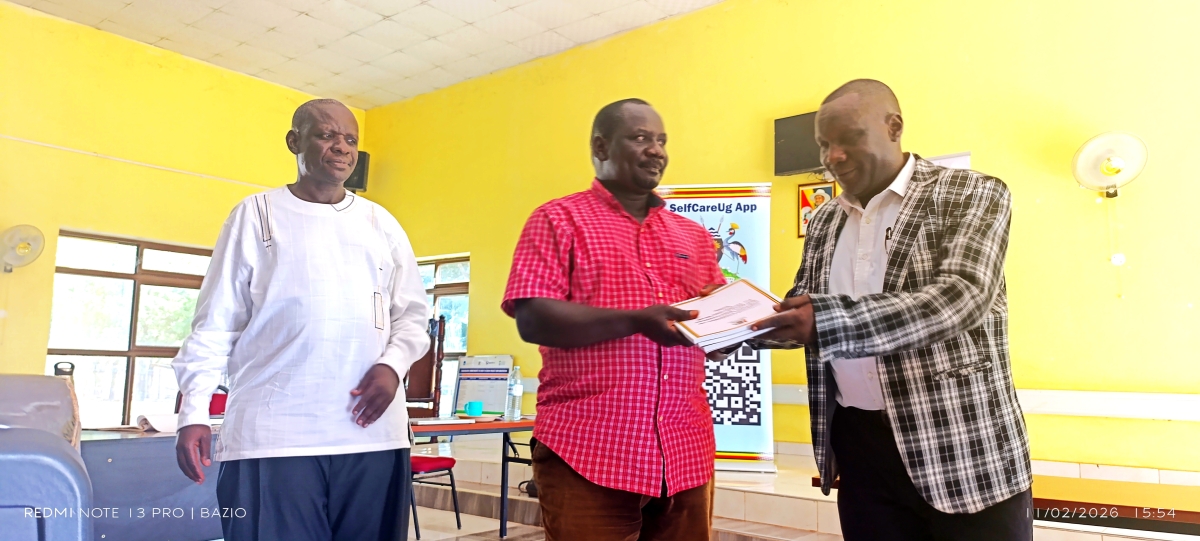
The Ministry of Health has officially rolled out the National Self-Care Interventions Program in Adjumani District, as part of an effort to integrate its guidelines as a key priority into the district work plan.
According to the Ministry, this is the first phase of implementation in one of ten districts selected nationwide, in line with the 2024 Uganda’s National Self-Care Guidelines.
While making opening remarks at the launch that took place at the District Council on Wednesday 11th February 2026, Richard Edema, the Principal Assistant Chief Administrative Officer, observed that the move would help the district to empower not only the staff but the communities to take charge of their own health and wellbeing.
“A healthy population is a productive population. When people take responsibility for their health, they contribute positively to development and economic growth in the district,” he said.
On his part, Dr. Dominic Drametu, District Health Officer, urged residents to embrace healthy lifestyles and take exercise as a personal habit.
“Do physical and natural exercises instead of the gym. Some diseases are due to age,” he said.
Indeed, John Sabuni, the Secretary for Health, linked poor self-care practices to preventable deaths, including road accidents emphasizing that people must be responsible for their own safety and health.
Meanwhile, Roseline Achola, a Technical Advisor for Sexual Reproductive Health and Family Planning at the Ministry of Health, said the program targets both individual and community responsibility for health.
“Self-care interventions promote health, prevent disease, and help people cope with illness and disability, with or without direct support from health workers,” she explained.
The program is expected to reduce pressure on health facilities by promoting preventive and community-based practices as well as strengthen coordination among partners and improve the delivery of preventive and promotive health services across Adjumani.
The guideline on self-care interventions for health and well-being encompasses combined efforts to (i) improve antenatal, intrapartum and postnatal care; (ii) provide high-quality services for family planning, including infertility services; (iii) eliminate unsafe abortion; (iv) combat sexually transmitted infections (including HIV), reproductive tract infections, cervical cancer and other gynecological morbidities; (v) promote sexual health; and (vi) address non-communicable diseases, including cardiovascular diseases and diabetes.
For decades, Uganda’s health system has largely focused on curative care, emphasizing hospital treatment and medicine availability once illness strikes. But with nearly 33 million cases treated in health facilities last year alone, in a country of about 46 million people, authorities say that many of these conditions could have been avoided through prevention at community level.
The Ministry has developed the Self-Care Uganda App, currently available on Android, offering guidance on family planning, nutrition, HIV management, and non-communicable diseases (NCDs), alongside referral options where necessary.
END.